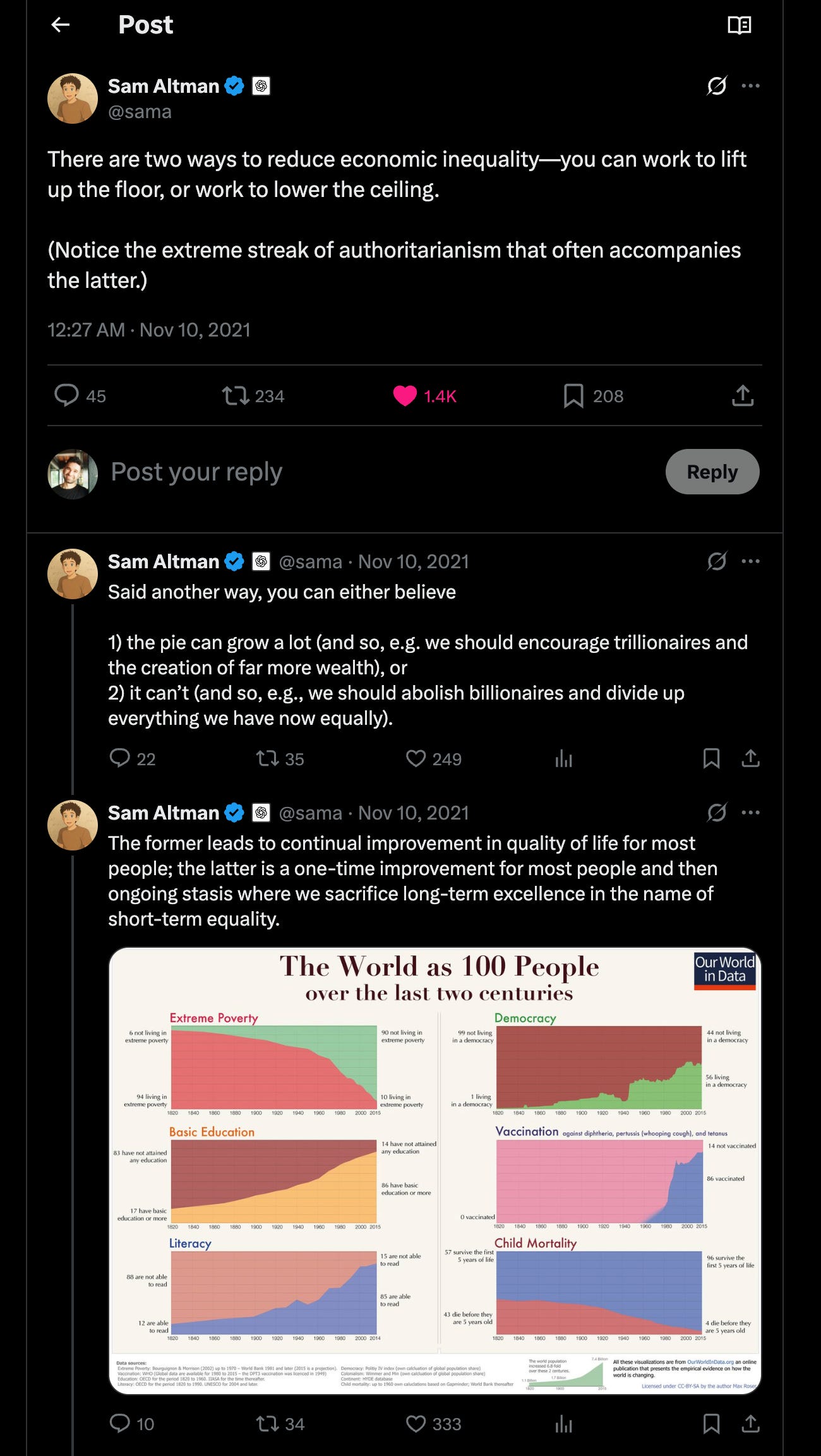
The ascending world

I’ve named this newsletter The Ascending World because I’m a believer in up-and-to-the-right. The idea that the world is getting exponentially better, despite all its problems, has always felt both true and underrated (at least for me). For those of us not living through war, life today is safer, richer, and more connected than it has ever been at any other time in human history.
Earlier today, I heard Dwarkesh say that no amount of money would make him go back 500 years, no antibiotics, high odds of dying from almost anything. Same here, I’m not nostalgic for those times.
Yet not everyone sees it that way. In fact, most people I meet are skeptical about our future as a species, or the trajectory of the world at large.

Let me illustrate how I see it, through a few short stories and experiences.
My wife and I often talk about places we’ve traveled to and whether we could see ourselves living there. The funny thing is that many places are great for a holiday, but quickly lose their appeal when you stay longer. This wasn’t obvious to me when I started traveling, but now it is. Often, it comes down less to infrastructure or convenience, and more to the mindset of the people.
So I’ve started to see the world in two types of places:
The ascending world: forward-looking, expecting next year to be better by design, not by chance.
The rest of the world: quiet, nostalgic, treating the past as something to defend rather than a base to build on.
Both have beauty but only one compounds.
The hidden cost of pride
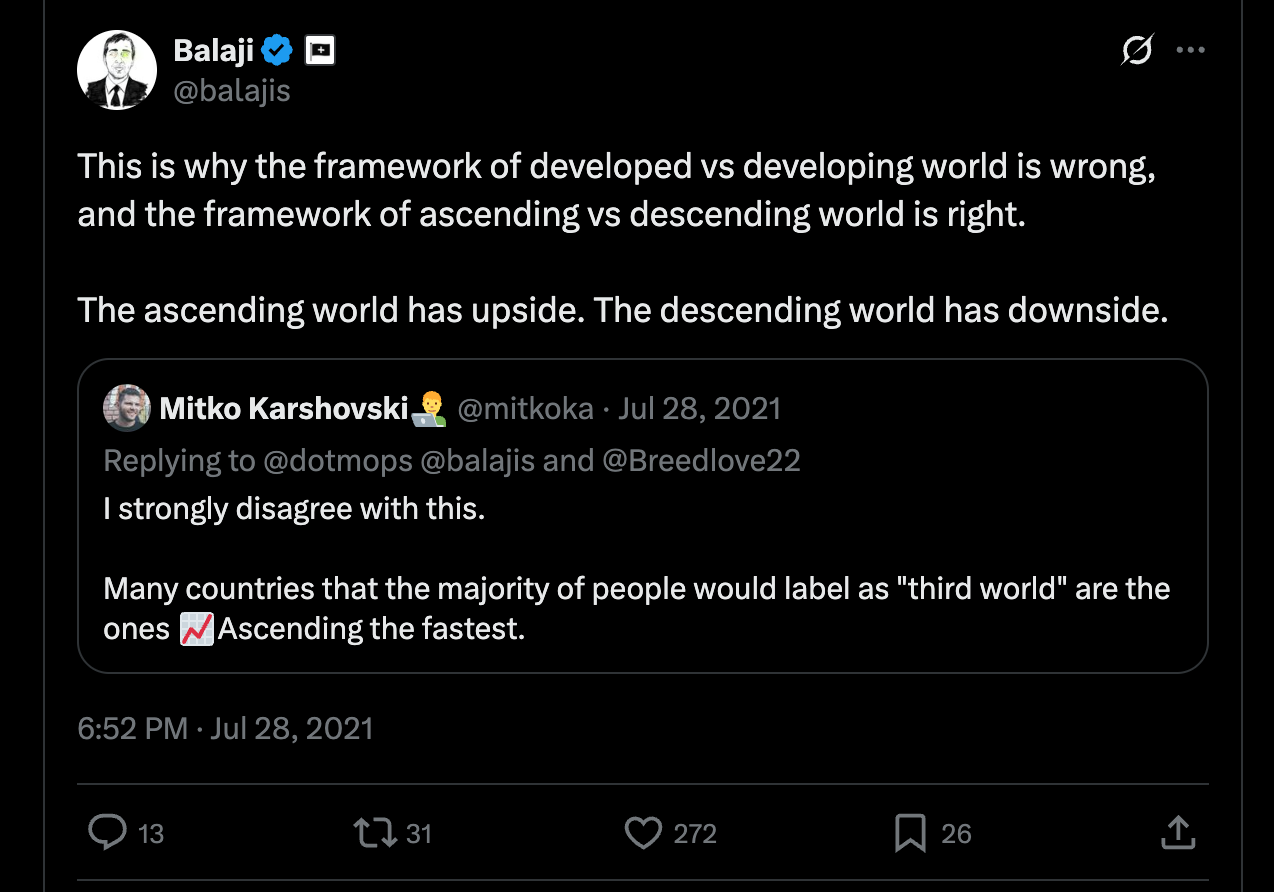
That difference shows up everywhere, in emerging markets, in wealthy nations, and in how people orient themselves toward time itself.
In the case of emerging markets, the downsides are obvious: slower internet, weaker healthcare systems, broken bureaucracy. Nothing surprising there.
On the other hand, what surprised me more was how some wealthy places quietly stagnate, not because of what’s missing, but because of what’s stopped. Some countries had their golden age decades or centuries ago. They still take pride in that past, and rightly so. But pride can harden into inertia. Heritage turns into something to protect rather than build upon. The past becomes the ceiling, not the foundation.
Why Asia feels different?
Twelve years ago, I visited Asia for the first time. I lived in Taiwan for half a year, then moved to Southeast Asia, spending the last decade between Malaysia, Indonesia, and now Singapore. One thing I sincerely appreciate about many “ascending” parts of Asia (e.g. China, Korea, Southeast Asia) is how strongly people orient toward the future. Many of these countries have lived through poverty and political instability in recent memory. That experience becomes fuel, a collective urgency not to fall behind again.
Just last week, over dinner with friends in Singapore, we talked about how quickly people are building wealth in Indonesia. The consensus was simple: the market is so big and growing so fast that if you’re competent, you’ll eventually make it. That’s the feeling you get in much of Southeast Asia, ambition and optimism towards the future are the default setting.
A few days later, another conversation stuck with me. We’d just moved into a place we really liked, and when we mentioned it to Singaporean friends, their immediate response was something about us upgrading in 2 to 3 years down the road. Their assumption was pretty clear. In their eyes, life would improve so much, so quickly, that a much better home was inevitable (in the not so distant future). That’s a mindset I’ve rarely seen in Europe.
Scarcity mindset
Compare that to much of Europe, where the conversations tend to be around scarcity. How to work less and secure a simple but comfortable life. The vibe is different: the best days are behind us, the present is fragile, and the future would require a scarcity driven approach. You see policies like solving global warming by reducing air conditioning, despite the fact that summer heat kills more Europeans each year than guns do Americans. It’s not just policy choices, you feel the divide when you walk through cities themselves.
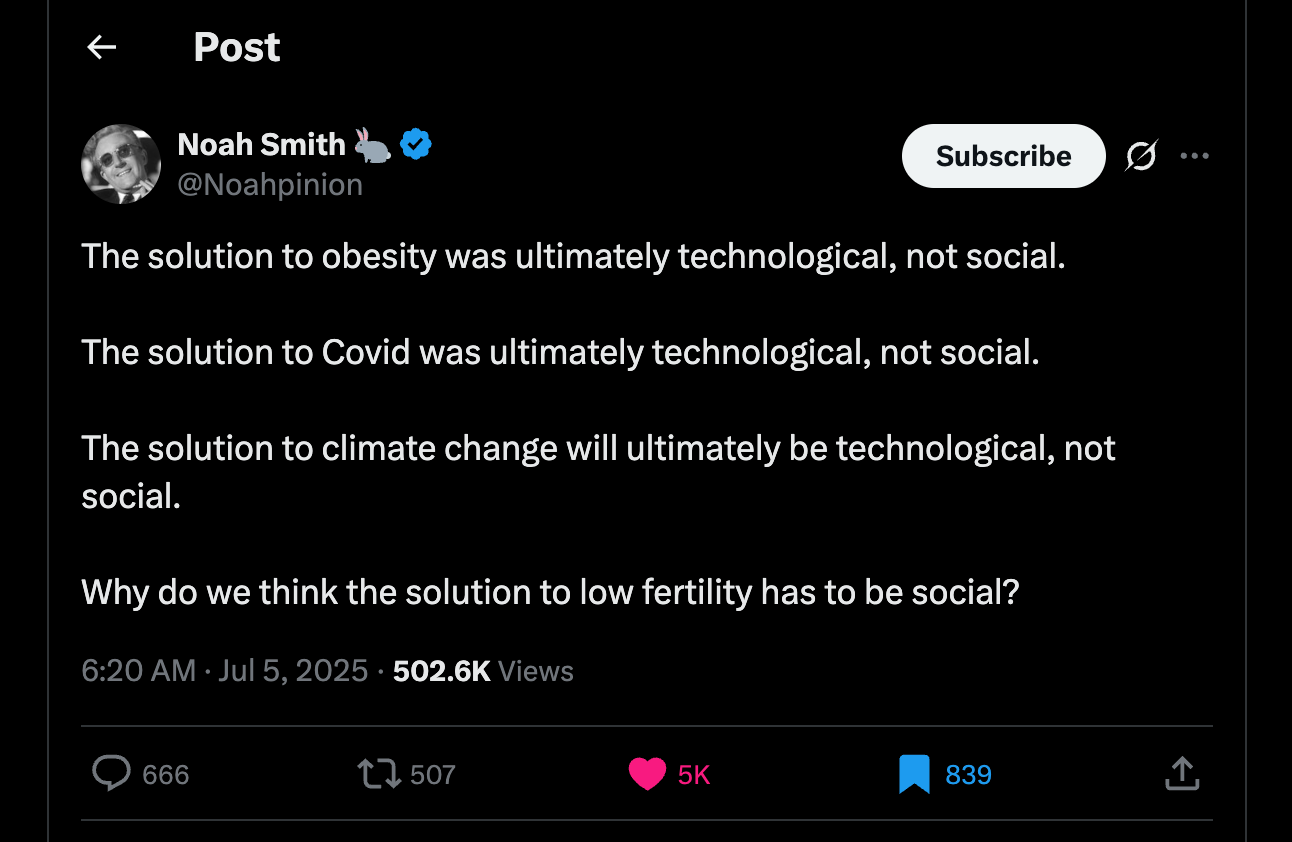
That contrast captures the divide well. In one mindset, progress is assumed, driven by technology, ambition, and growth. In the other, decline is managed, comfort is defended, and solutions are framed around limits rather than possibility.
The museum problem
I know it’s trendy to dunk on Europe, it’s become too easy but to be fair, places like Scandinavia and Poland are doing great!
Still, it’s hard to ignore how much of the continent feels feels a little more like a museum: beautiful, historic, static and a little less like a progressive place that’s shaping the future.
A few months ago in Vienna, we stopped by Café Central. I was quite excited to visit because I heard how the cafe was once a gathering place for some of the most brilliant thinkers of their time, Adler, Zweig, Freud, and Herzl. Today, it’s packed with tourists taking photos and ordering overpriced cake. Whatever intellectual energy once defined it is gone. The most stimulating question being asked is whether to post the moment on Instagram or TikTok. Don’t get me wrong though, that’s not a knock on Vienna specifically, it’s a symptom of what happens when a society becomes overly fixated on preserving the past.
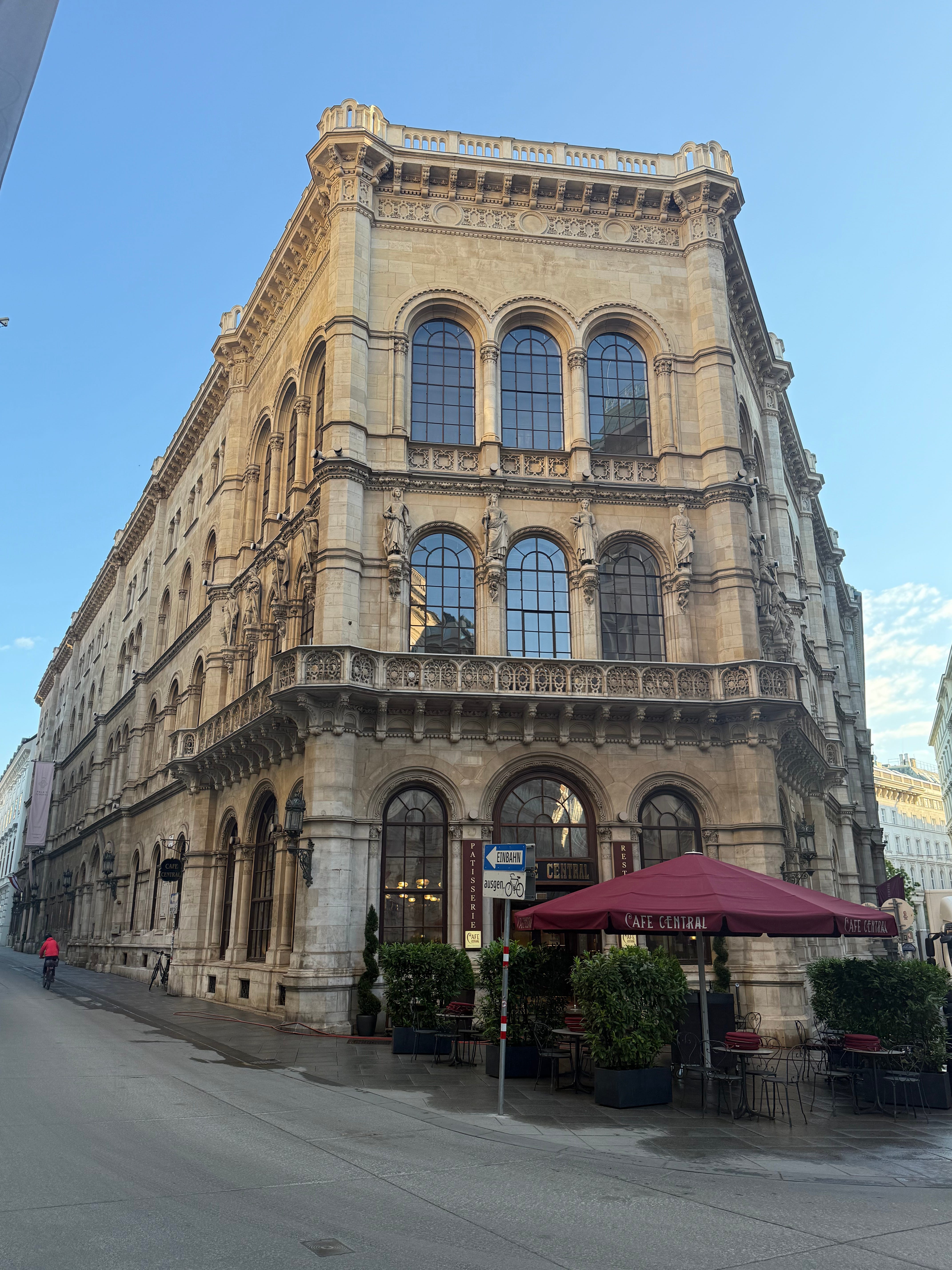
You walk down its beautiful streets, and locals proudly tell you who used to live on that corner. But ask them what exciting things are being built now, and the conversation comes to an end. When a city celebrates the past more than the present, there are consequences.

Pride vs motion
There is a Jason Zweig quote I really like that connects perfectly here:
"Being right is the enemy of staying right—because it leads you to forget how the world works."
Past success or greatness can fool people into believing the world still works as it once did.
I say this carefully because my home country, Bulgaria, suffers from this exact problem. The longer I live abroad, the more I notice it. The country has deep pride, but not enough motion. Many folks will argue it’s the best place on earth, while the metrics quietly disagree.
Meanwhile, in parts of Southeast Asia, sentiment and outcomes are separate variables. People switch cities, roles, industries, whatever moves the curve.
Five years ago, I was offered a chance to relocate from Indonesia to Singapore. I braced for a hard conversation with my then-girlfriend, now wife. I expected sadness, perhaps a pushback? Instead, she encouraged me to go!
When I asked her why, and whether her family would be okay with it, she calmly explained: “There are more opportunities. You’ll earn more; that helps both of us.” It did not feel cold, it was pragmatic. Choose the environment that raises your trajectory. Be loyal to your future.
That response confused me. Over time, I saw it wasn’t unusual. Among many Indonesians of Chinese descent, pragmatism runs deep. They think in terms of outcomes, not sentiment. They live well, travel often, invest in new businesses, and keep compounding. Each time I visit, their homes are bigger, their cars newer, their lives more comfortable, not by chance, but by design.
Now contrast that with how many people in Bulgaria think. Often, they’ll find ways to argue that Bulgaria is superior, despite the country ranking near the bottom of the EU in almost every meaningful metric. It took me years of living abroad to realize how misguided that mindset is.
_v2.png)

Feynman’s warning
It reminds me of a story from Richard Feynman. He once visited Greece and was struck by how much people revered the past. In a letter, he wrote:
It appears the Greeks take their past very seriously. They study ancient Greek archeology in their elementary schools for six years, having to take 10 hours of that subject every week. It is a kind of ancestor worship for they emphasize always how wonderful the ancient Greeks were — and wonderful indeed they were.
When to encourage them by saying yes and look how modern man has advanced beyond the ancient Greeks (thinking of experimental science, the development of mathematics, the art of the renaissance, the great depth and understanding of the relative shallowness of Greek philosophy, etc., etc.) — they say, “What do you mean — what was wrong with the ancient Greeks?”
They continually put their age down and the old age up, until to point out the wonders of the present seems to them to be an unjustified lack of appreciation for the past. They were very upset when I said that the thing of greatest importance to mathematics in Europe was the discovery by Tartaglia that you can solve a cubic equation — which, altho it is very little used, must have been psychologically wonderful because it showed a modern man could do something no ancient Greek could do, and therefore helped in the renaissance which was the freeing of man from the intimidation of the ancients — what they are learning in school is to be intimidated into thinking they have fallen so far below their super ancestors.
The past should be a floor, not a ceiling.
Questions worth asking
If this essay resonated with you, ask yourself, are you embracing the ascending world?
Time horizon: Do people talk about what they have achieved this week and what they’ll try next, or mostly about what they once were?
Status games: Is status awarded for building or for guarding?
Error tolerance: Are small failures treated as part of the game or prohibitive?
Mobility: Can a talented outsider rise quickly, or is the gatekeeping thick?
Conversation content: Are the best debates about frontiers (AI, energy, biotech, new cities) or about formats (status, holidays, cars, and politics)?
Does this mean the “ascending” places are objectively superior? Not at all, it’s a personal choice. Asia has its flaws, I’ll write about those another time.
But despite those flaws, my bet is still on the ascending world. Keep your pride, but trade the inertia. Expect the upgrade. And if the place you live treats the past as a ceiling instead of a floor, move to where the future is bright.